

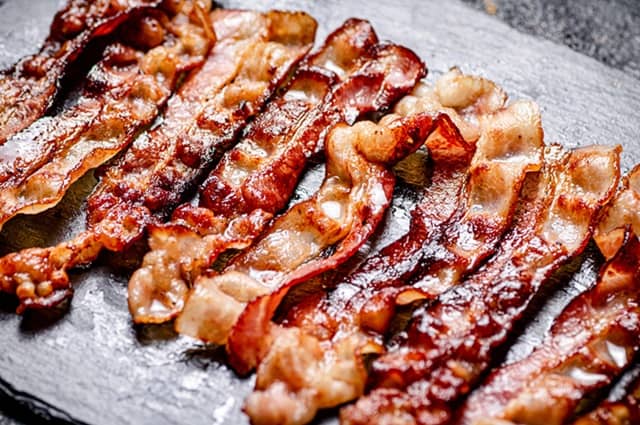
Few breakfast foods are as universally loved as bacon. Crispy, smoky and savory, it can elevate everything from eggs and pancakes to burgers, sandwiches, and salads. But did you know the way bacon is cooked can completely change its flavor and texture? Whether you are making a full weekend brunch or just craving a few strips with breakfast, these five how to cook bacon methods each bring something different to the table.
Pan-Frying Bacon
Pan-frying is the classic bacon-cooking method, and, for many people, it is still the gold standard. Cooking bacon directly in a skillet allows it to slowly render its fat, creating crispy edges and that rich, savory flavor everyone loves. Starting with a cold pan and cooking over medium heat helps the strips cook more evenly and prevents burning.
One advantage of pan-frying is control. It is easy to remove individual slices once they reach the desired texture, whether slightly chewy or extra crisp. The leftover bacon grease can even be saved to cook eggs, potatoes or vegetables for an extra boost of flavor. Of course, this method does require more attention, and the grease splatter can make cleanup a little messy, but for many bacon lovers, it’s worth it!
Oven-Baked Bacon
Many cooks swear by the consistency and convenience that cooking bacon in the oven offers. Arranging strips on a parchment-lined baking sheet allows the meat to cook evenly without constant flipping or supervision. Some cooks also place the bacon on a wire rack so the grease drips below, creating an even crispier texture.
This method is especially useful when cooking breakfast for a crowd or meal prepping for the week ahead. The steady oven heat helps reduce burnt spots, and the hands-off approach frees up valuable stovetop space for pancakes, eggs or hash browns. Cleanup can also be surprisingly simple when foil or parchment paper is used to catch the grease.
Air Fryer Bacon
Air fryers have become a kitchen favorite in recent years, and bacon is one food that cooks especially well inside them. The circulating hot air helps create crispy bacon quickly while allowing excess grease to drip away from the strips, resulting in crispy bacon with less mess.
Air fryer bacon is perfect for smaller portions and quick breakfasts. It also tends to create less splatter and lingering grease smell compared with pan-frying on the stovetop. However, it is important not to overcrowd the basket, since overlapping strips can cook unevenly. Depending on the size of the appliance, larger batches may need to be cooked in rounds.
Microwave Bacon
Need bacon in a hurry? The microwave might be the fastest and easiest option of all. Placing bacon strips between layers of paper towels helps absorb grease and minimize mess, and within just a few minutes breakfast is ready.
While microwave bacon may not develop quite the same deep flavor or perfectly crisp texture as other methods, it works surprisingly well for busy mornings or single servings. It is also one of the easiest cleanup methods, which can be a major bonus on hectic weekdays.
Grilled Bacon
Last, but certainly not least, you can grill bacon. Sure, this takes longer than any of the other methods, primarily because you’re waiting for the grill to hit the proper temperature, but if you’re not in a hurry the end result is worthwhile. It is best grilled over medium temperature, 350-375 F, using indirect heat to avoid flare-ups.
For best results, use thick-cut bacon, place it perpendicular to the grill grates and flip it halfway through until it reaches your desired crispness. All told, it takes about 15 minutes of grilling time. You can also thread the bacon onto skewers for easier handling if desired.
In the end, how to cook bacon the best way comes down to personal preference—and when it comes to bacon, there really is no wrong answer