

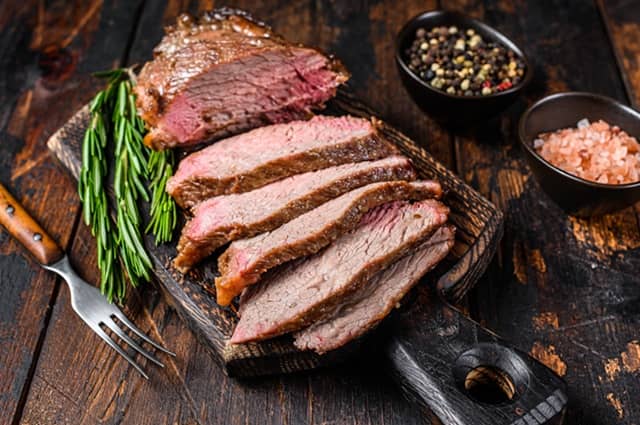
If brisket is the king of barbecue, trisket might be its clever younger cousin. Despite the name, a trisket is not a special cut of beef you’ll find waiting in the butcher case. It’s actually tri-tip cooked in the style of brisket. The name is a playful mashup of “tri-tip” and “brisket,” and the technique turns the relatively small, lean cut into a smoky, bark-covered and remarkably tender slice of meat.
How it’s Made
Making a trisket starts with a tri-tip roast, usually around two to three pounds. Trim away excess fat and silver skin, season it generously, then place it in a smoker at a low temperature, often around 225 to 250 degrees. From there, patience does the work. The meat develops a dark, flavorful bark as it absorbs smoke, and many recipes wrap it partway through cooking before returning it to the smoker. Unlike traditional tri-tip, which is commonly cooked to medium-rare, trisket is taken much further, generally until it reaches the tender, pull-apart stage associated with brisket.
Trisket on the Tongue
And what does it taste like? The outside develops that savory, smoky bark, while the long cooking time transforms the interior into tender slices that can be enjoyed much like brisket. It won’t have exactly the same texture or richness as regular brisket, since tri-tip is a leaner cut with a different structure. Still, the combination of smoke, seasoning and low-and-slow cooking gives trisket plenty of barbecue character.
Trisket vs. Traditional Brisket
The simplest point of differentiation between the two is the cut of beef. Brisket comes from the breast or lower chest of the cow and contains substantial connective tissue and fat. Tri-tip comes from the bottom sirloin and is considerably smaller and leaner. Cooking tri-tip like brisket changes how that cut behaves, producing a completely different result from the steak-like preparation it usually gets. (But the big advantage is that trisket can reach the table in a fraction of the time required for a traditional full brisket!)
Slice n Serve
Once it’s rested and sliced against the grain, a trisket can be served pretty much anywhere brisket would make sense. Pile it onto a toasted bun with barbecue sauce and pickles, serve it alongside classic barbecue sides, or simply arrange the slices on a platter and let the smoky bark do the talking. It’s particularly appealing for smaller gatherings, when smoking an entire brisket feels like considerably more meat, time and effort than the occasion calls for. In other words, trisket doesn’t try to replace brisket. It simply offers another way to get that low-and-slow barbecue experience from a smaller cut.