

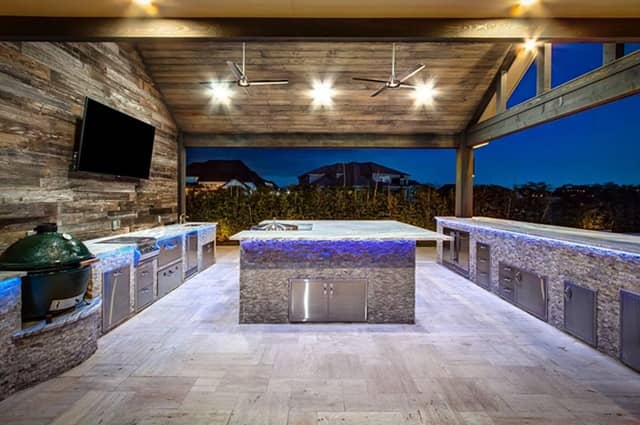
As millions of Americans prepare to use their outdoor kitchens over the summer, our friends at RTA Outdoor Living offer homeowners some warnings about common construction mistakes that can create serious fire, gas and structural safety risks. The outdoor kitchen market has grown substantially over the past decade, but outdoor kitchen construction safety practices have not always kept pace with safety requirements. Here are the top five mistakes.
1. Building with combustible framing materials
Wood studs and standard lumber are common choices for outdoor kitchen island framing, despite being classified as combustible materials under the International Building Code and National Fire Protection Association guidelines. Wood framing can ignite or spread fire when exposed to sustained heat from cooking appliances and can deteriorate over time from outdoor exposure, weakening the structural integrity of the entire island. Non-combustible alternatives like engineered concrete composite, steel or CMU block are the appropriate materials for this application.
2. Inadequate or absent island ventilation
Ventilation is the most overlooked safety feature in outdoor kitchen construction, and the consequences of getting it wrong can be severe. Propane gas is denser than air and sinks into enclosed island cavities when connections are loose or valves are not fully closed. Natural gas rises but accumulates in poorly vented spaces. A spark from the grill igniter in either scenario can trigger an explosion.
Most grill manufacturers require a minimum of 20 square inches of ventilation at both the top and bottom of each side of the island, with openings on the back, left and right sides to allow cross-ventilation. But many kitchens are built with far fewer vents than required.
3. Ignoring manufacturer setback requirements
Every major grill manufacturer specifies minimum clearance distances between the grill and surrounding surfaces, and these requirements apply to all four sides of the unit, not just the back. Kitchens built against combustible materials such as wood siding or fencing typically require 12 to 24 inches of clearance per the manufacturer’s specifications.
RTA’s review of specifications across major grill brands found that setback requirements are frequently misread, ignored or unknown to the contractors performing the installation. Grease fires and heat damage to adjacent structures are among the documented consequences.
4. Installing on a structurally inadequate surface
A permanent outdoor kitchen with concrete panels, countertops and appliances can weigh several thousand pounds. Residential decks are rarely engineered to carry that load, and the stress is not always apparent during installation, and it often doesn’t become visible until months later.
Concrete and paver patios without adequate footings can also settle unevenly, causing the island structure above to shift and crack. A structural assessment of any surface bearing the kitchen’s weight, particularly an elevated deck, is a necessary step before construction begins.
5. Using appliances not rated for built-in installation
Cart-model grills are designed for freestanding use and are not engineered for installation inside an enclosed island cavity. Built-in rated appliances account for the restricted airflow of an island enclosure; cart grills do not. Modifying a cart grill for built-in use is a safety error and can lead to serious risk.