
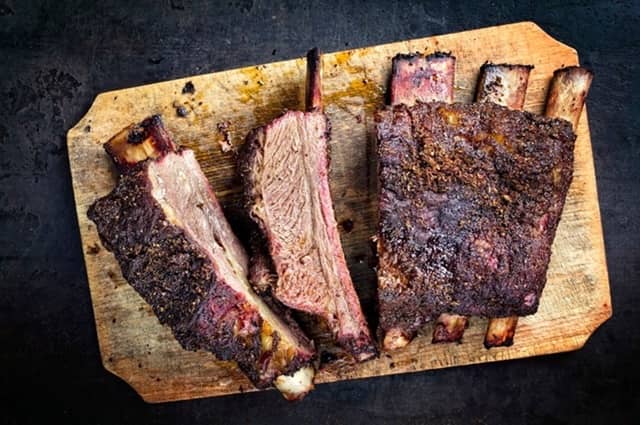
If you’ve ever wanted to eat like a dinosaur, here’s your chance! Dino ribs are exactly what they sound like: enormous, meaty beef ribs that look almost prehistoric. A favorite among barbecue enthusiasts, these oversized cuts are as impressive on the table as they are delicious. But what makes them different from your average rack of ribs, and are they worth the time it takes to cook them?
Big Bones, Bigger Flavor
Dino ribs, also known as beef plate ribs or brontosaurus ribs, are oversized beef short ribs typically cut from the plate section of the cow. They’re commonly sold as a rack of three bones; each topped with a thick layer of meat. Unlike pork ribs or beef back ribs, which tend to have less meat surrounding the bone, these hefty cuts offer plenty to sink your teeth into. And yes, they’re big enough to make you feel like you’re dining in the Jurassic era!
The Meat of the Matter
Size isn’t the only thing that makes dino ribs special. Their generous marbling and connective tissue contribute to an incredibly rich, beefy flavor. When cooked properly, that connective tissue gradually breaks down, leaving behind tender, juicy meat that practically falls apart with a little pressure. Add a smoky exterior and a beautifully developed bark, and you’ve got a barbecue showstopper.
Choosing the Right Cut
When shopping for dino ribs, ask your butcher specifically for beef plate ribs. Look for a rack with plenty of meat covering the bones and good marbling throughout. You’ll often find them at specialty butcher shops, meat markets or online meat retailers. If you have the option, USDA Choice and Prime grades are both worth considering, with Prime generally offering more marbling. One thing to remember: beef back ribs are not the same cut, so don’t let the similar names fool you.
Low, Slow and Worth the Wait
Dino ribs aren’t something you throw on the grill 20 minutes before dinner. They’re traditionally smoked low and slow, usually around 250–275°F, to give the meat plenty of time to become tender. Start with a generous seasoning of salt and black pepper, then let the smoker do most of the work. Oak, hickory and pecan are popular wood choices that complement the beef’s natural flavor. Depending on the size of the rack and cooking conditions, expect roughly 6–10 hours or more. The real test, however, is when a thermometer probe can slide into the thickest part of the meat with little resistance. That’s when you know it’s ready. Let the ribs rest before slicing so those flavorful juices have time to settle.
A Feast Fit for a Crowd
Once those beauties come off the smoker, don’t be shy about making them the centerpiece of your spread. Slice between the bones for individual portions or bring the entire rack to the table for a little dramatic flair. Classic barbecue sides like baked beans, coleslaw, cornbread and mac and cheese make excellent companions. And since these ribs are so substantial, a single bone can often feed more than one person, depending on its size and what else is on the menu.