
For barbecue lovers who refuse to leave great food at home, a portable pellet grill is a gamechanger. Whether you’re tailgating in a stadium parking lot, setting up camp at a state park, or firing up a quick weeknight cook on a small patio, these compact smokers bring serious wood-fired flavor wherever you go. But are they right for you? Here’s what you need to know.
What Makes a Pellet Grill “Portable”
A portable pellet grill is generally defined by its compact footprint, lighter weight, and travel-friendly design. Most models weigh between 20 and 50 pounds and offer between 150 and 300 square inches of cooking surface– enough for a rack of ribs or a spatchcocked chicken, but not a full brisket flat. Some come equipped with folding legs, or a folding carrying handle that make it easy to move about and thus a reliable option for grilling on the go.
The Tech Behind the Smoke
Like their full-size counterparts, portable pellet grills run on wood pellets fed from a hopper into a fire pot via an automated auger. A digital controller manages airflow and fuel delivery to maintain a set temperature, essentially turning your grill into a set-it-and-forget-it outdoor oven with real smoke flavor. Most portable models top out at 450–500°F, with a low end around 180°F for smoking, which is a solid range for most cooks, though true high-heat searing remains a limitation on some units.
Smoke Flavor and Cooking Versatility
One honest trade-off with smaller pellet grills is smoke output. The shorter cook chambers and faster airflow of compact units can produce a milder smoke profile than a full-size pellet grill. That said, cooking low and slow foods like pulled pork, ribs, or whole chickens, still yields genuinely flavorful results. Where portable pellet grills shine is versatility: most can smoke, roast, bake, and even reverse-sear steaks without switching equipment!
Pellet Consumption and Hopper Size
Hopper capacity is one of the first things to check before buying. Hoppers that are typically 5 to 10 pounds may need to be refilled on longer cooks. At low temperatures, most grills burn through roughly 1–2 pounds of pellets per hour, meaning a 5-pound hopper gives you around 3–4 hours of uninterrupted cook time. Plan accordingly for longer cooks or look for models with larger hopper-to-footprint ratios. If you’re looking for a grill with a notably large hopper for its size, consider the GRILLA Chimp 2.0 Tailgater pellet rill for its 15 lb. capacity.
Key Specs and Who Should Buy One
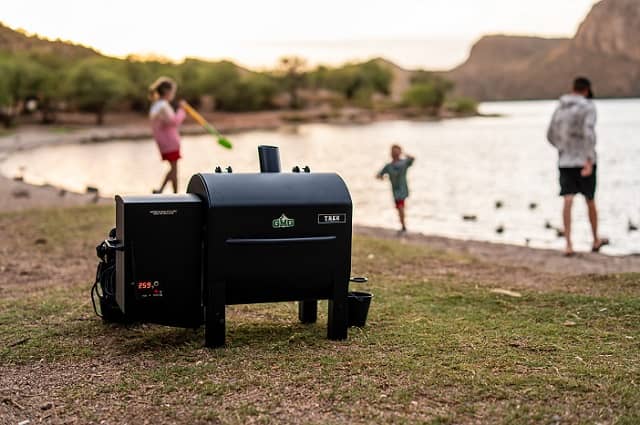
When comparing models, things to consider are the size of the cooking area, hopper size, total weight, and whether the unit runs on standard AC power or offers a 12V battery option for off-grid use. Take the TREK PRIME 2.0 for instance.
Built for true portability and reliable performance whether you’re on the road or in the backyard, it provides safe and efficient power consumption. Its Wi-Fi-enabled smart control system paired with the GMG app lets you adjust temperatures, monitor food probes, and manage cooking profiles from virtually anywhere. With features like remote server access, timers, and customizable cook programs, the TREK PRIME 2.0 brings a high-tech, hands-off approach to grilling.
Portable pellet grills are ideal for campers, tailgaters, apartment dwellers, and anyone short on outdoor space. While they’re not the best fit for large gatherings or competition-level smoke rings, they can certainly tackle everyday outdoor cooking with real wood flavor.