

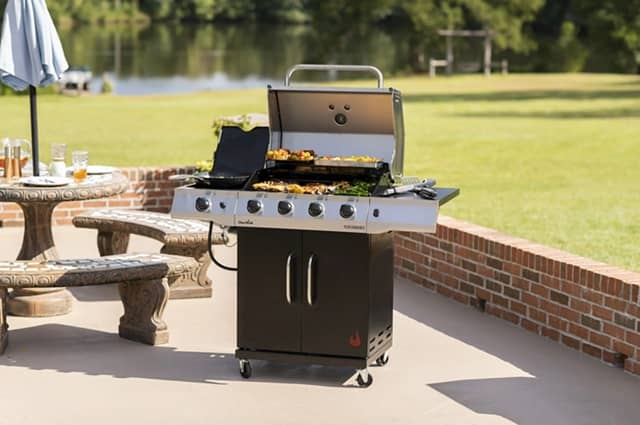
Backyard gas grills have earned their place as the everyday backbone of the backyard for one simple reason: they make cooking great easy. With a quick turn of the knob and a push-button ignition, you’re preheated and ready to go in minutes. It’s this kind of speed and control that turns a random Tuesday into burger night without a second thought! More than anything, a gas grill delivers consistent, reliable heat, giving you the confidence to cook everything from steaks and seafood to vegetables with results that feel almost automatic.
Propane vs Natural Gas
One of the first decisions you’ll make is whether to go with propane or natural gas, and the right choice mostly comes down to how permanent you want your set-up to be. Propane tanks offer flexibility, so you can position the grill anywhere in the yard and take it with you if you move.
Natural gas, on the other hand, connects directly to your home’s fuel line, which means you’ll never run out mid-recipe or need to haul a tank to be refilled. It’s a set-it-and-forget-it solution, although it does require professional installation and keeps your grill in a fixed location.
Burner Setups
Burner count plays a bigger role than many people expect, because it directly affects how you cook. (Listen closely if you are torn between the Charbroil Performance Series 2 and the Charbroil Performance Series 4!) A two-burner grill is typically more compact and budget-friendly, making it a smart fit for smaller patios or for anyone who mostly grills for a couple of people at a time. Step up to three or four burners, though, and you unlock true multi-zone cooking. You can sear over high heat on one side while gently roasting or keeping food warm on the other.
Cooking Power & Performance
When it comes to cooking power, it’s easy to get distracted by big BTU numbers, but real performance is about how efficiently that heat is delivered and maintained. A well-designed gas grill will preheat quickly, recover fast when the lid is opened, and distribute heat evenly so you’re not juggling hot and cool spots. Solid grates, effective flame tamers, and a substantial lid all work together to create the kind of steady, convection-style environment that handles everything from high-heat searing to roasting.
A grill like the Weber Genesis E-335 is a good example of that balance in action: its dedicated sear zone delivers steakhouse-level browning, while the generous 787-square-inch cooking area holds upward of 20 burgers without crowding. The added side burner also turns the grill into a full outdoor cooking station, making it possible to prepare sauces or sides alongside the main event.
Fuel & Efficiency
Fuel costs and physical footprint are the details that tend to shape long-term satisfaction, especially if your outdoor space is limited. A larger, full-featured grill can anchor a patio, but it also requires more propane per cook and more room to live comfortably, while compact models are easier to maneuver, store, and run efficiently for everyday meals. That’s where a smaller option like the Napoleon TravelQ makes a strong case: its foldable cart design rolls out when you need it and tucks away neatly when you don’t, making it ideal for smaller backyards, balconies, or anyone who doesn’t want a permanent grill footprint.