

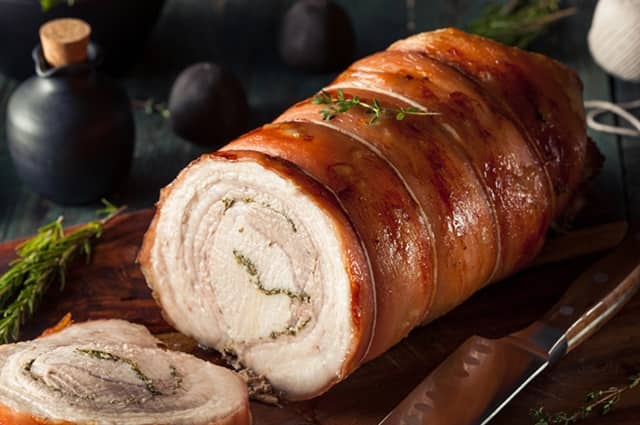
So, what is porchetta? At its core, it is an Italian pork roast, but calling it just a pork roast doesn’t quite do it justice. Traditionally, it’s a whole pig (or a large section of one) that’s been generously seasoned, rolled, and slow roasted until the meat is meltingly tender, and the skin turns shatteringly crisp. It’s rich, aromatic, deeply savory, and designed to be eaten in slices. If you’ve ever tasted porchetta and wondered why it feels so indulgent yet so balanced, that’s the magic of fat, herbs, and patience working together.
Porchetta’s Italian Roots (and How It Traveled)
Porchetta traces its roots to central Italy, particularly regions like Lazio, Umbria, and Tuscany, where it’s long been associated with festivals, markets, and celebratory gatherings. Historically, it was practical food: roasting an entire pig fed a lot of people, and the heavy seasoning helped preserve and flavor the meat. Over time, it became a point of pride.
As Italian immigrants brought their food traditions with them, porchetta made its way abroad. In recent years, though, it’s had a full-blown moment outside Italy. Chefs love it because it’s dramatic, nostalgic, and wildly flavorful; diners love it because it’s familiar enough to feel comforting, yet special enough to still feel like a treat. That dynamic is a big reason porchetta now shows up everywhere from butcher counters to upscale restaurant menus!
The Cut of Pork
Porchetta isn’t one single cut. It’s usually a combination of pork belly and pork loin with the belly bringing richness and fat, and the loin adding structure and lean meat into the mix. When rolled together, you get layers that stay juicy while roasting, instead of drying out. That fat-to-meat ratio is why porchetta tastes luxurious without being overwhelming.
The Flavor Profile: Herbaceous, Savory, and Crisp
The flavor is all about balance. Garlic, fennel, rosemary, and citrus zest are classic seasonings, creating something that’s deeply savory but still bright and fragrant. Salt plays a key role, especially in drawing moisture from the skin so it can crisp properly. When done right, each slice delivers tender meat, aromatic herbs, and a crackling exterior that makes the whole thing addictive.
How Porchetta Is Typically Prepared
Making porchetta is certainly a commitment, but it’s worth the effort. The pork is thoroughly seasoned, often a day ahead, then rolled tightly, tied, and slow roasted for several hours. That low-and-slow process allows the fat to render and baste the meat from the inside out. Toward the end, the heat is raised to blister the skin.
How Porchetta Is Served
In Italy, porchetta is famously served sliced thick and tucked into crusty bread, often with nothing more than its own juices. It also appears as a centerpiece at celebrations, carved tableside and shared. Outside Italy, you’ll find it plated with vegetables, layered into sandwiches, or featured as a show-stopping main. No matter how it’s served, porchetta is meant to be generous, both in flavor and spirit!
Pork Belly Porchetta on a Kamado Grill
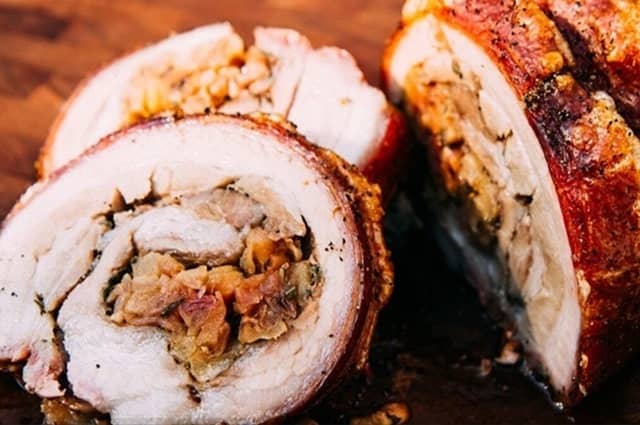
Ingredients for Pork Belly
2½–3 pound pork belly
Salt
Pepper
1 Tbsp sage (minced)
2 Tbsp olive oil
2 cups apple cider vinegar
1 Granny Smith apple (sliced)
3–5 whole garlic cloves
A few sage leaves
Ingredients for Stuffing
1 medium red onion (small-chopped)
3 Granny Smith apples (peeled and small-chopped)
1 Tbsp leftover bacon grease or olive oil
3 cloves garlic (minced)
2 Tbsp fresh sage (minced)
1 Tbsp apple cider vinegar
Salt (to taste)
Pepper (to taste)
Start the stuffing by sautéing the onion and 2 of the apples in olive oil until golden brown (the leftover apple will be used for aromatics when smoking).
Toss in the sage and half the minced garlic, then let sauté for another 1–2 minutes before adding the apple cider vinegar.
Season to taste with salt and pepper, then set aside while you prepare the pork belly.
Score the pork belly skin both vertically and horizontally, making cuts about ½ an inch apart. Don’t go too deep with your cuts — you’re trying to cut through only the skin layer, not the meat itself.
Once the skin is scored, flip the pork over to turn the meat side up. Score this side in a diagonal pattern, cutting just a bit deeper than the skin side. These cuts help the herbs and seasonings reach deep into the meat.
Next, sprinkle a thin layer of salt and pepper over the meat side, followed by a thin layer of minced sage. Rub the seasonings in well.
Place the stuffing on one edge of the pork belly and pack it down lightly. Begin carefully rolling the belly, starting with the stuffing side. If any stuffing falls out while rolling, just try to pack it in through the sides.
Once the pork is rolled, secure it by wrapping it in kitchen twine. Space your twine wraps about 1–1 ½ inches apart, using as many wraps as needed (ours took 4 strings).
Place your pork, uncovered, in the fridge overnight to help the skin dry out.
Preheat your kamado smoker to 250 degreesº F using natural lump charcoal as your fuel.
Remove your pork from the fridge, then brush a thin layer of olive oil all over the belly. Follow that up with another small sprinkle of salt and pepper.
Add apple cider, apple slices, garlic cloves, and sage leaves to a pan deep enough to hold them. Top the pan with the roasting rack, then place the pork on the rack above the aromatics.
Arrange an indirect cooking method in your kamado, then toss in 3 or 4 wood chunks around the bed of the coals to add flavorful smoke.
Place the pork in the center of your indirect setup and let it cook until it reaches an internal temperature of 160 degrees at the thickest part of the roll. This should take about 3 hours depending on the size of your pork belly.
Once temperature is reached, crank up the heat to 400-450º and let the skin crisp for about 15–25 minutes. A small amount of stuffing oozing from the sides of the pork belly may burn in the high heat, but you can just discard that and still enjoy the beautiful stuffing underneath.
Remove your pork from the kamado and let it rest for 20 minutes.
Slice the porchetta as thin or thick as you’d like and enjoy!